We are living within a broken system that has created a planetary crisis. Those most affected by climate change are those least responsible and the international policy frameworks we have in place aren’t working.
Civil society and faith based groups like ORCIE-BCRÉI have an important role tracking the misalignment between governments planned fossil fuel production and global production levels consistent with limiting global warming to 1.5°C or 2°C.
We urgently need public finance policy, priorities, and governance to push instead towards a just energy transition rooted in collective wellbeing and global and local equity. There is no shortage of public money available to do this, it is just poorly distributed, flowing to fossil fuels and the super-rich instead of shared priorities.
Change from below
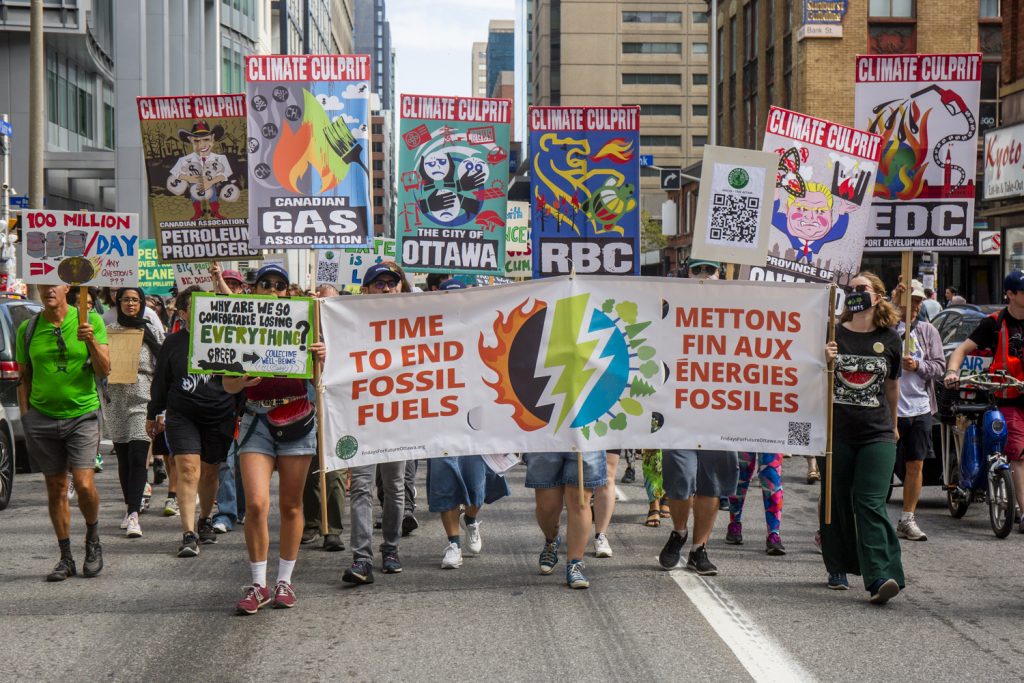
In Laudate Deum (31), Pope Francis does not hesitate to encourage increased advocacy for the just energy transition. ‘The demands that rise up from below throughout the world, where activists from very different countries help and support one another, can end up pressuring the sources of power. For this reason, I reiterate that “unless citizens control political power – national, regional and municipal – it will not be possible to control damage to the environment.’
Combining our forces to build momentum, faith groups give voice to a message of hope, peace and reconciliation instead of tariffs, acquisition and submission. This is a much needed paradigm shift where the Christian church is called to defend and to protect the wellbeing of people and the environment.

What does ORCIE-BCRÉI mean when we talk about renewed action for the climate?
Fossil Fuel Phase-Out
We believe we need a fossil fuel phase out where we limit fossil fuel production, not just emissions. There is no room for new oil and gas fields or coal mines to be opened anywhere in the world. In multilateral forums we need to see clear signals where developed countries take the lead.
A small number of wealthy countries, including Canada, are responsible for most of the world’s planned expansion in oil and gas production. Oil Change International tracks which countries top this list and updates it as production plans shift. We are too silent on developed countries’ responsibility, both historically and currently, to phase out fossil fuels first. This is the major brake we need to achieve a just and equitable global energy transition.
Ambitious Plan to Cut Canada’s Emissions
Canada’s fair share of the global effort to limit warming means a strong domestic plan to reduce greenhouse gas emissions, cutting the sector’s emissions by at least 45% below 2005 levels by 2030, with zero compliance flexibility, offsets, or loopholes. We must cap fossil fuel production, not just emissions. Fossil fuel subsidies are impeding us and incentivizing pollution.
The federal government’s own draft cap fell well short of this, targeting only 35 to 38% below 2019 levels. In November 2025, Ottawa abandoned even that weaker version, agreeing not to implement any cap at all in exchange for fast-tracking a new West Coast pipeline. The case for a real cap on this sector has never been stronger.
Strong Loss and Damage Fund
Loss and damage is now the third pillar of climate policy architecture, along with mitigation and adaptation, and should be identified as a form of climate reparations. We need commitments to predictable, grant-based, additional and adequate support for developing countries.
The absence of financial commitments from developed countries, in particular in relation to their climate finance obligations, is a major obstacle to implementing any COP decisions, and severely weakens the consensus reached. An unjust or unfunded agreement for fossil fuel phase out and renewable energy phase in puts at risk an urgent energy transition.
Latest Updates:
ORCIE Endorses Open Letter on Canada’s International Climate Finance
August 10, 2026 - Climate Justice, Ecological Debt, International
ORCIE Denounces the Elimination of the Office of the Canadian Ombudsperson for Responsible Enterprise (CORE)
June 19, 2026 - Climate Justice, International, National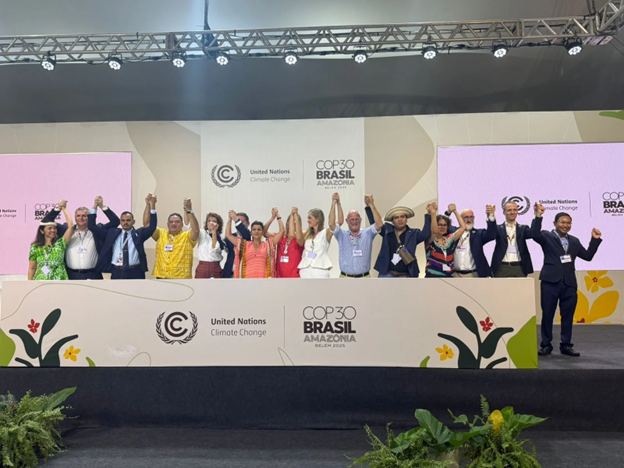
From Santa Marta to Tuvalu: What the First TAFF Conference Means for Catholics Advocacy
May 25, 2026 - Climate Justice, Ecological Debt, International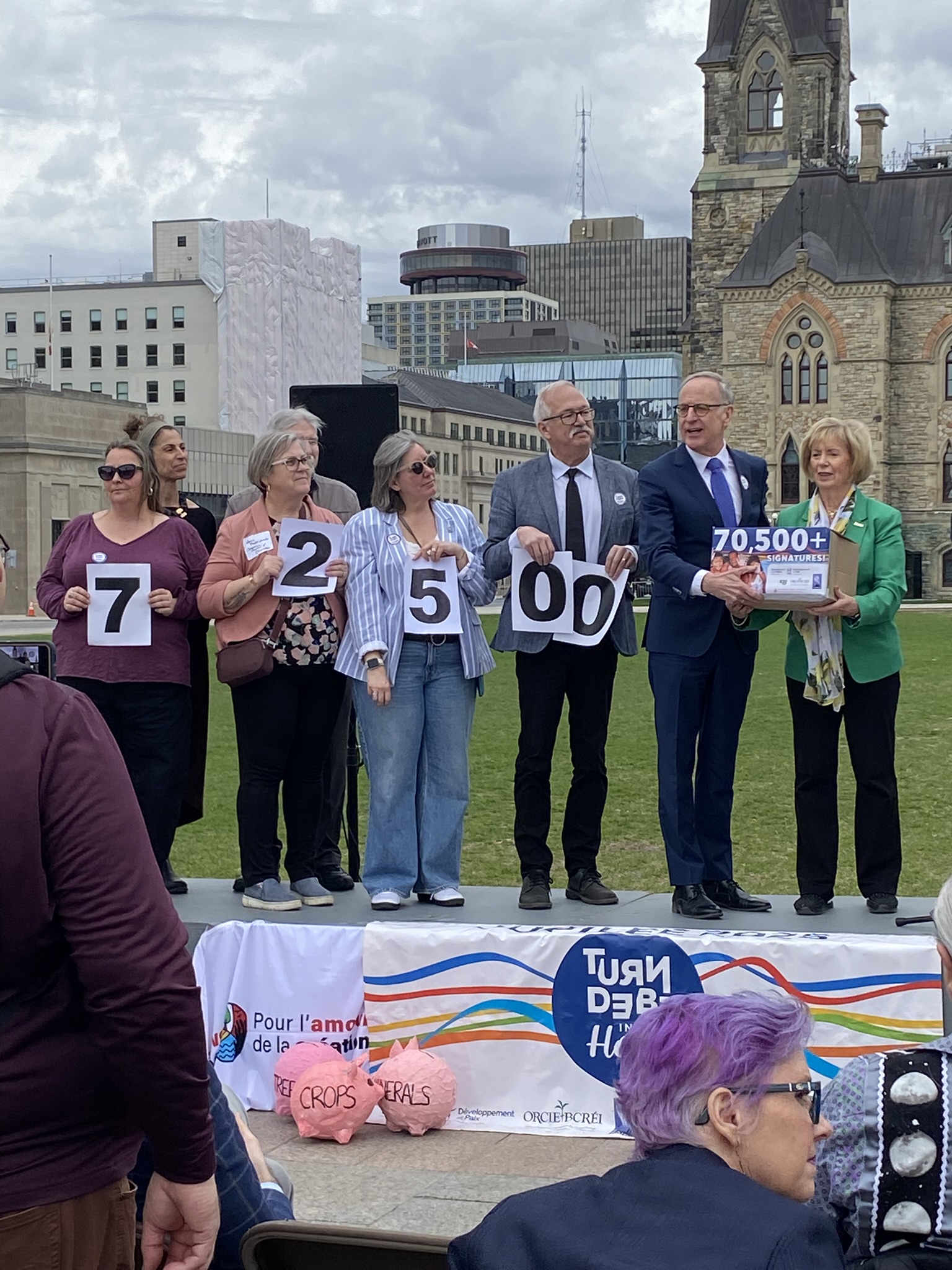
Turning Debt Into Hope: ORCIE’s Role in a Collective Call for Debt Justice
May 22, 2026 - Climate Justice, Ecological Debt, International, Reconciliation
A Just Transition: The Global South Churches’ Call for Climate Justice and Participation
March 18, 2026 - Climate Justice, International
Transformer la dette en espoir — Pétition parlementaire
March 2, 2026 - Climate Justice, Ecological Debt, International
Turn Debt Into Hope — Parliamentary Paper Petition
February 12, 2026 - Climate Justice, Ecological Debt, International, National
From Ottawa to Belém: ORCIE’s Voice for Integral Ecology at COP30
November 27, 2025 - Climate Justice, International
Signing On for Justice at COP30
November 26, 2025 - Climate Justice, International