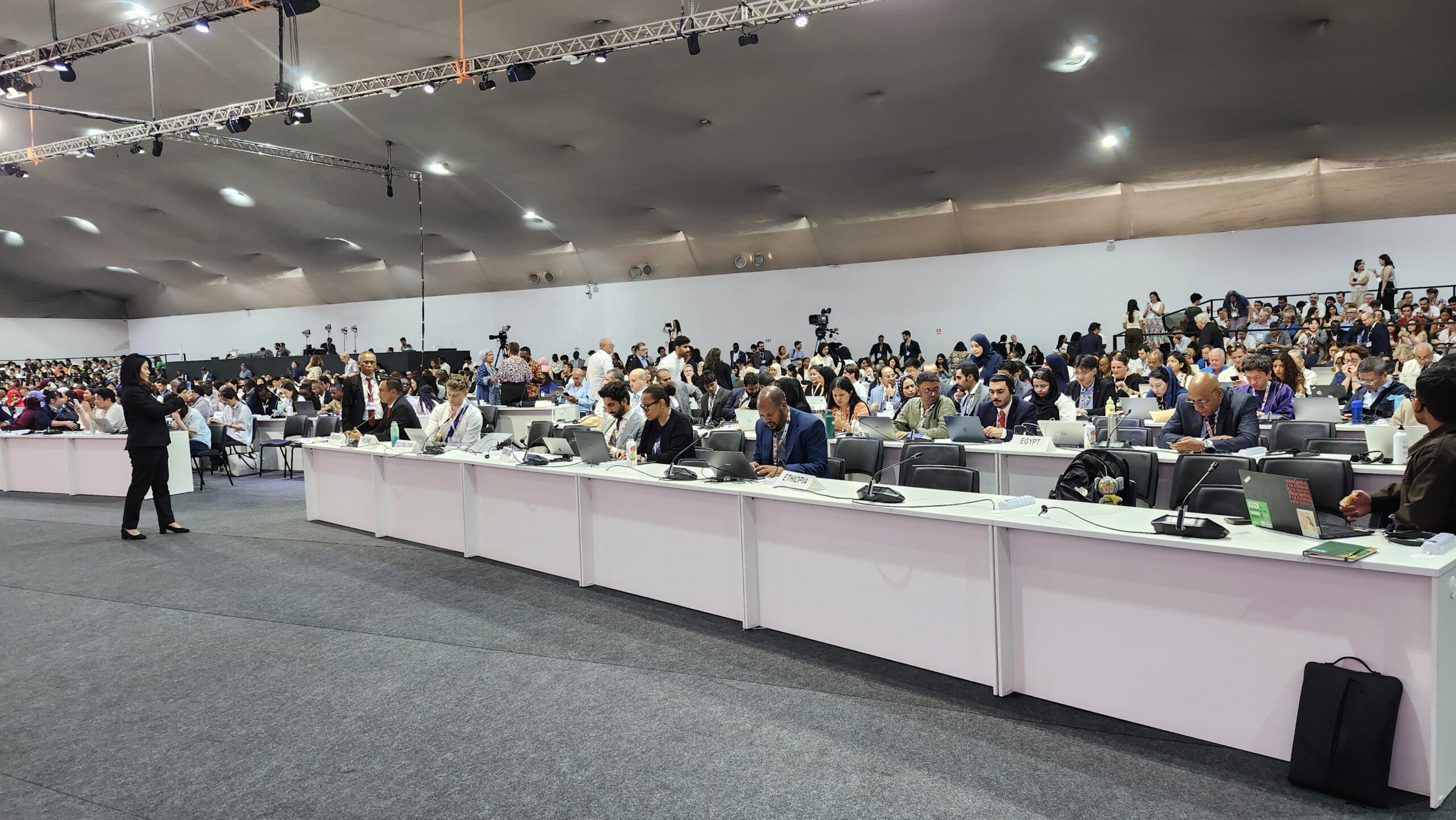
During ten days of dialogue, meetings, and collective mobilizations, Genevieve and Sasquia from the Office of Religious Congregations for Integral Ecology (ORCIE) actively engaged in COP30, highlighting the importance of embedding integral ecology within global climate negotiations and emphasizing the need for policies that advance justice for people and planet.
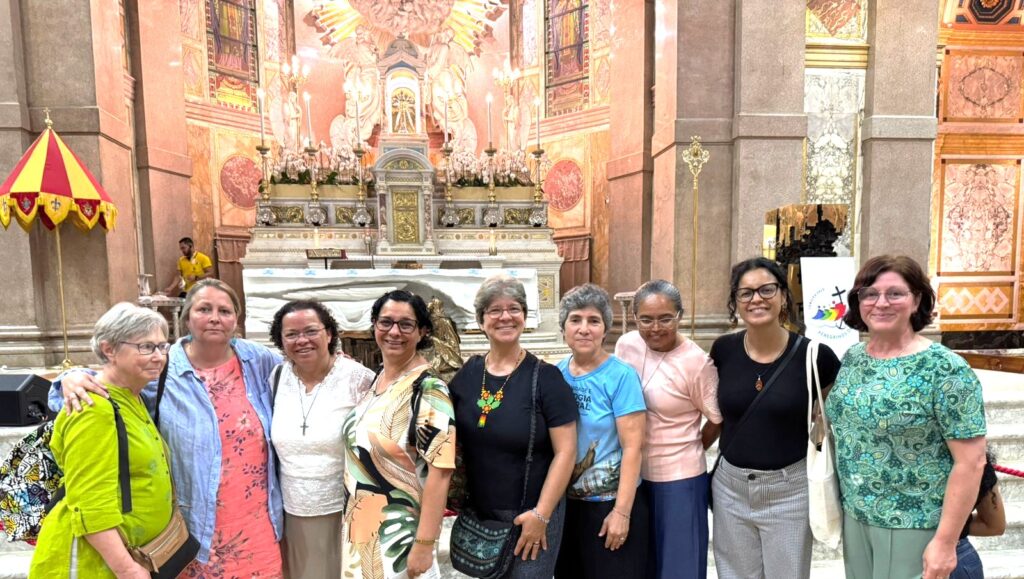
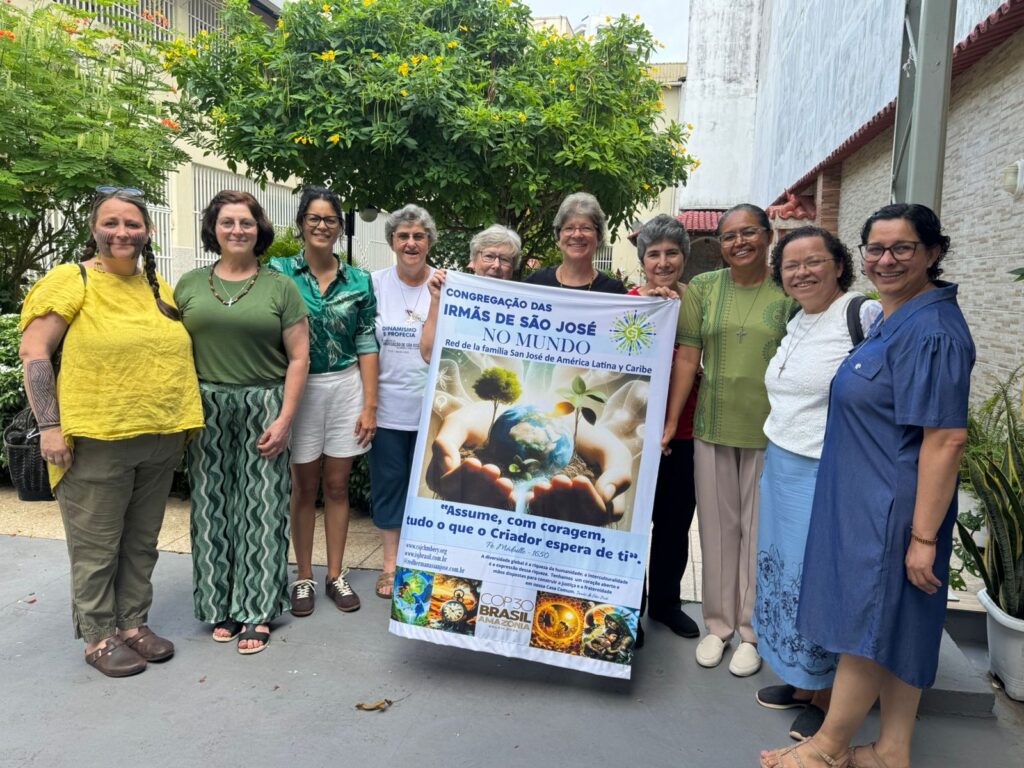
Our meaningful time spent with the Sisters of St. Joseph in Brazil grounded the COP experience in the realities and perspectives of the Global South. These new relationships not only deepened our understanding of integral ecology but also strengthened our resolve to build bridges between communities in the Global North and South in pursuit of climate justice.
Building Bridges at COP30: Highlights from Delegation Activities and Key Engagements
Integral Ecology and Religious Leadership
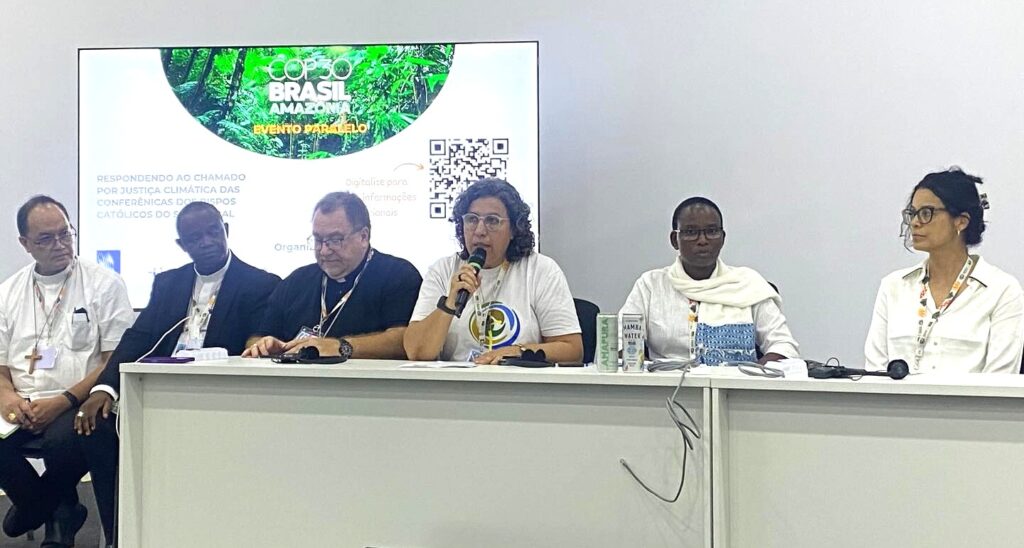
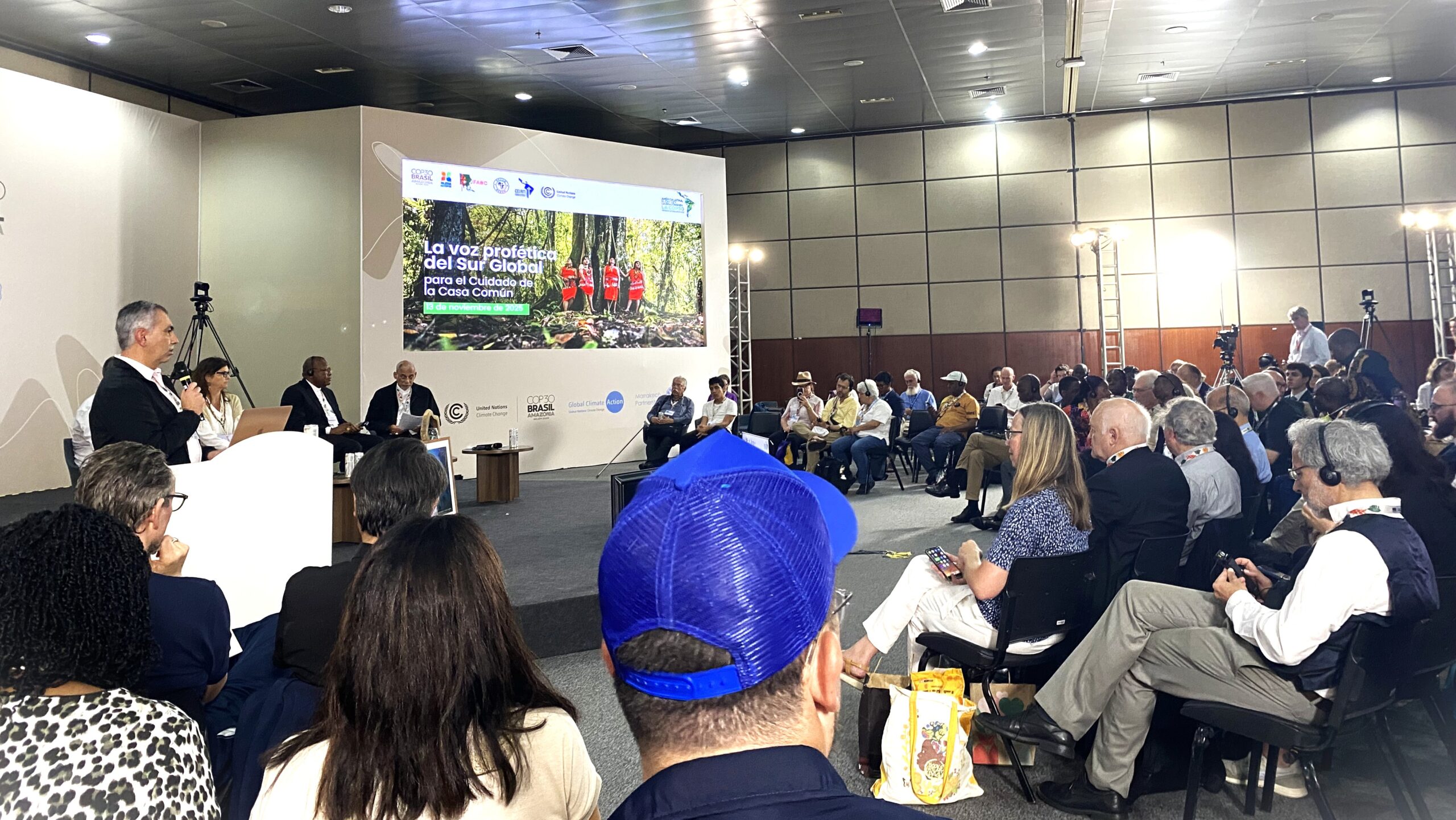
Sasquia Antúnez Pineda spoke at the Blue Zone panel Responding to the Global South Catholic Bishops Conferences’ Call for Climate Justice, which urged the Global North to address ecological debt, phase out fossil fuels, and reject false solutions to the climate crisis. She highlighted ORCIE’s commitment to integrating this call into future briefings and joining the Catholic Church in the Global South to build a historic North-South coalition for climate action, supporting the Ecclesial Observatory on Climate Justice.
Genevieve Gallant was invited to act as an advisor on Just Transition negotiations for the Holy See at COP30, reflecting ORCIE’s growing role in shaping faith-based climate advocacy.
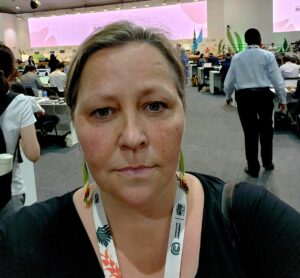
Engagement with Canadian Delegates
- ORCIE met with Canadian government representatives on multiple occasions during the first week of COP30, including Hon. Julie Dabrusin, Minister of Environment and Climate Change, Hon. Steven Guilbeault, Minister of Canadian Identity and Culture, MP Patrick Bonin, and Senator Mary Coyle.
- While the two Cabinet Ministers’ time in Belém was no more than a few days, we were able to join other civil society organizations asking questions and pushing for greater ambition and coherency in Canada’s claim to climate leadership. How can the Minister celebrate Canada’s new methane regulations while planning to abandon the oil and gas emissions cap and provide subsidies to LNG expansion?
- ORCIE engaged Canada’s chief negotiator, Jeanne-Marie Huddleston on the Belém Action Mechanism (BAM), pressing Canada to support the new coordination mechanism designed to align finance, social justice and labour rights with climate goals in the implementation of just transition plans.
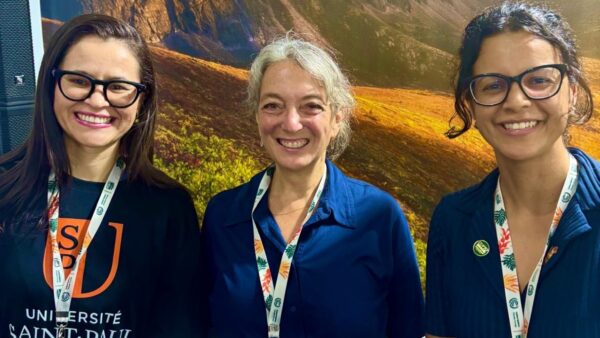
From left to right: Elen Fonseca, St. Paul University, Hon. Julie Dabrusin, and Sasquia Antúnez Pineda, ORCIE
Building Catholic and Civil Society Networks
- ORCIE collaborated with long-standing partners— KAIROS, CAN-Rac, Development and Peace—while deepening ties with international Catholic organizations such as CIDSE, strengthening collective advocacy across Canadian civil society and the Church.
- ORCIE met with Latin American partners, including Caritas Internationalis and the Integral Ecology Research Network, opening pathways for future collaboration on the newly launched Ecclesial Observatory on Climate Justice.
- Participation in side events with debt justice organizations, highlighted the moral imperative of climate finance and the role of faith groups in advancing ecological justice.
Peoples’ Summit and Church Mobilization
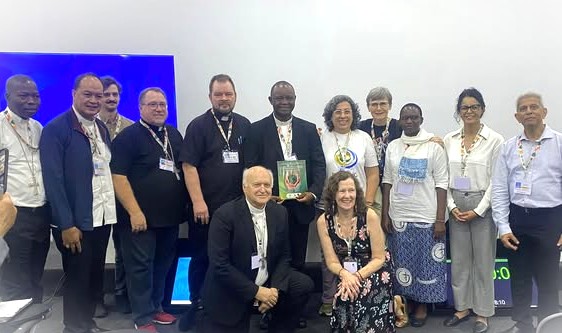
- The unprecedented presence of cardinals, bishops, and Catholic organizations at COP30 highlighted the Church’s strong commitment to ecological justice and synodality culminating in a joint declaration that ORCIE proudly endorsed.
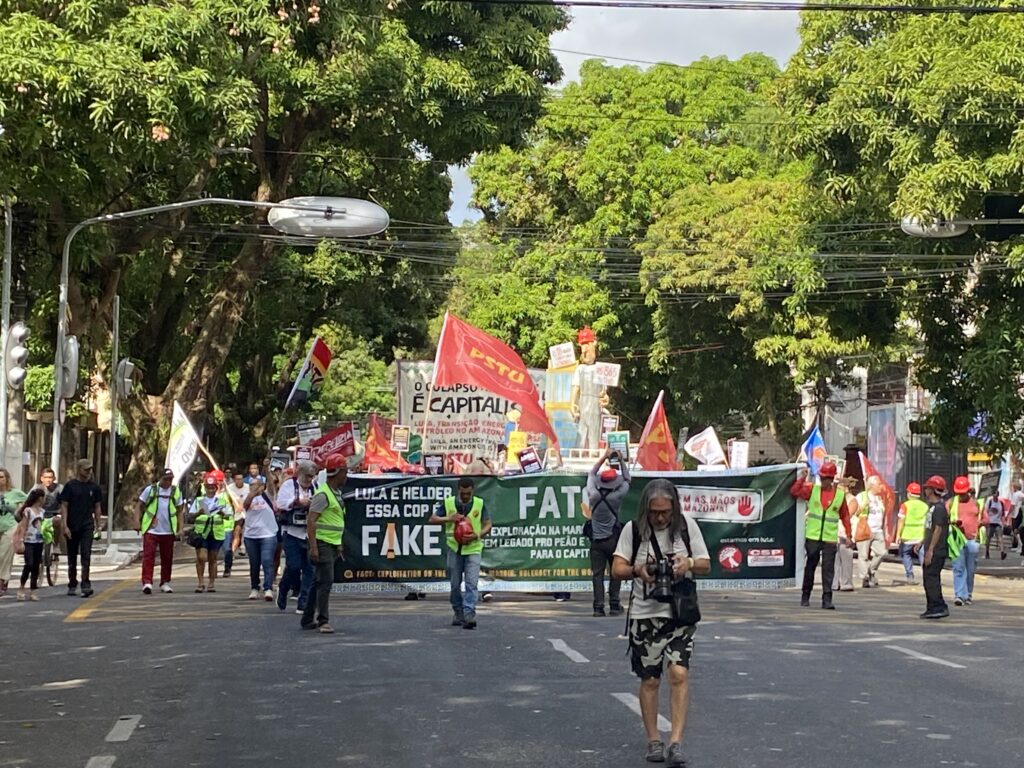
- Alongside the Sisters of St. Joseph, Brazil, we participated in the Peoples’ Summit, a powerful grassroot forum for social movement mobilization.
- ORCIE joined more than 70,000 people in the November 15 global march for climate justice, standing shoulder to shoulder with grassroots movements, indigenous communities and people of faith.
Reaffirming Dedication to Elevating Perspectives from the Global South
Our experience at COP30 reaffirmed that the path to climate justice must be shaped by the voices and realities of the Global South. Staying with the Sisters of St. Joseph in Brazil allowed us to witness firsthand the resilience of communities confronting climate impacts daily. Their lived experience, rooted in faith and integral ecology, provided a lens through which global negotiations could be understood not as abstract policy debates but as urgent matters of survival and dignity.
Participation in the Peoples’ Summit further highlighted the leadership of Indigenous partners and grassroots movements, whose wisdom and resistance are essential to building just transitions. These encounters reminded us that advocacy must go beyond technical solutions—it must honor the spiritual, cultural, and ecological knowledge of those most affected.
By weaving together relationships with the Sisters of St. Joseph in Brazil, the Indigenous people and communities, and Latin American Catholic networks, ORCIE is committed to ensuring that Canadian climate advocacy reflects the interconnectedness of our global community. Elevating these perspectives is not only an act of solidarity but also a prophetic call to reshape climate governance in ways that prioritize justice, equity, and care for our common home. Our ongoing work will continue to prioritize the voices of communities most affected by the climate crisis, ensuring that Canada’s climate policy reflects both global responsibility and local realities.
The Journey Continues: Advancing Integral Ecology Post-COP30
Canada’s showing at COP30 was disappointing and it was a shock to come back from Belém to news of public funding for an oil pipeline and regression on the oil tanker ban on the ecologically sensitive B.C. coast. We will have to strengthen our advocacy and outreach to Canadian leaders because we are clearly missing the point of the challenge we are facing collectively. We need greater coherency in our response to climate change and real systemic change that will uphold justice and equity.” —Genevieve Gallant, ORCIE Executive Director
Stay tuned in the coming weeks for our analysis and reflections on COP30. The insights into the UN negotiations and Canada’s leadership gap will inform our advocacy efforts in Spring 2026 as we continue to push for climate justice.
Follow us on facebook to read more about our COP30 interventions: https://www.facebook.com/orcie.org