• Skip to primary navigation
  • Skip to main content
The Office of Religious Congregations for Integral Ecology

The Office of Religious Congregations for Integral Ecology

  • About Us
    • Our Story
    • Our Team
    • Members
    • Testimonials
  • Our Work
    • Climate Policy National
    • Climate Policy International
    • Reconciliation
    • Jubilee 2025 Campaign
  • Activities & Updates
  • Resources
  • Communications
    • Media
    • E-Newsletter
  • Contact Us

International

Global Treaty to Control Plastics Pollution

April 8, 2024

Sue Wilson, Executive Director of the Office for Systemic Justice, Federation of Sisters of St. Joseph of Canada, was one of the 2,500 delegates from 174 countries gathered at the fourth session of the United Nations Intergovernmental Negotiating Committee on Plastic Pollution, held in Ottawa in April 2024. This UN committee was set up to develop an international, legally-binding treaty targeting plastics pollution and to eliminate plastic waste by 2040. A fifth, and final session, is scheduled for November 2024 in South Korea.

Every year, over 430 million tons of plastic are produced, much of which ends up in our waterways, forests, and even our food. Developed countries, including Canada, often ship their plastic waste overseas, contributing to this global issue. Scientists have long raised alarm about the chemicals in plastics and the risk they pose to human health and the environment.
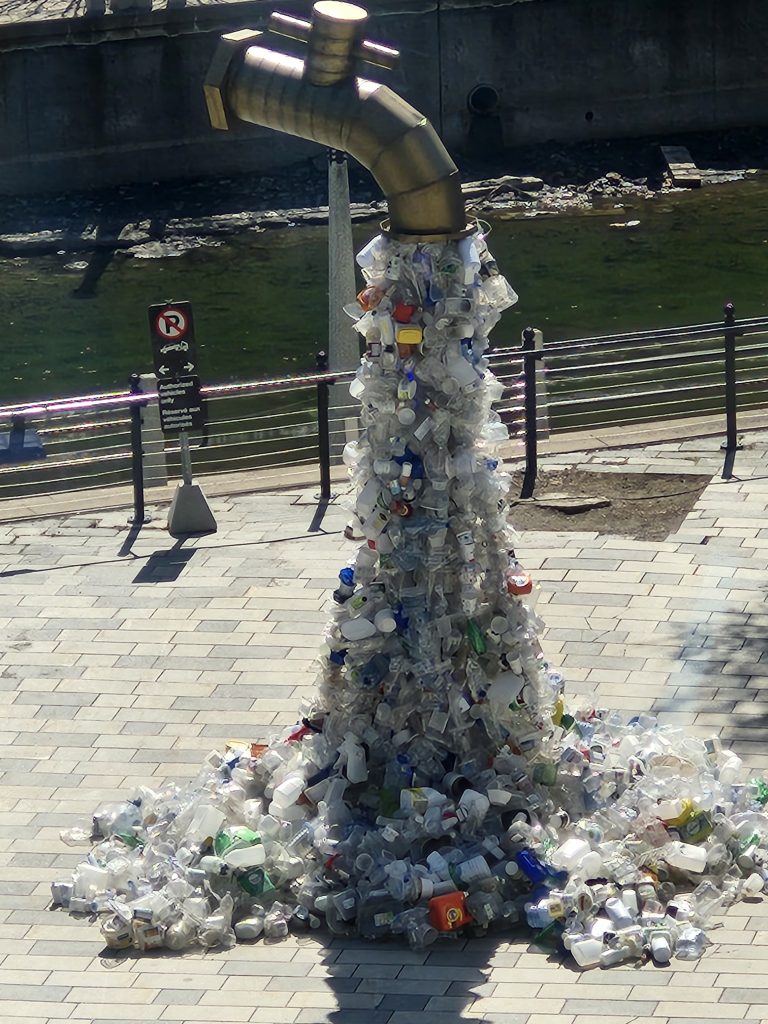
The major issue of debate during the Ottawa meeting was that “[while] civil society groups are calling for countries to adopt a legally-binding target to slash plastic production 78 percent by 2040…[the] fossil fuel lobbyists are working hard to ensure the final draft of the treaty won’t contain a cut in plastic production… they were focused on recycling but without committing to putting the infrastructure in place for large-scale recycling.” Sue reflects that such an approach “relies on the myth of recycling,” ignoring data that shows that “only 9% of plastic gets recycled… [and that] most plastic is just not recyclable”. Real solutions will involve significant cuts in plastic production.

There was visible tension in meetings over fair representation of international stakeholders. A key issue was that “some civil society delegates were pushing for more representation and participation by Indigenous Peoples, whose communities are among those most affected by plastic pollution.” Civil society groups also demanded a human rights-based approach to negotiations, including a just transition for impacted communities and plastic waste workers.

In Canada, while environmental groups advocate for production caps on plastic, the government is focusing on measures like phasing out harmful chemicals, restricting single-use plastics, increasing recycling, and creating a Plastic Registry — a monitoring and reporting measure for companies on plastic production, recycling and reuse. As nations continue to negotiate an agreement in the final session, civil society groups will work for it to be as just and ambitious as possible.

Fossil Fuel Non-Proliferation Treaty

September 10, 2023

Just like fifty years ago, when the world used international treaties to defuse the threats posed by nuclear weapons, today the world needs a Fossil Fuel Non-Proliferation Treaty. Chaired by Canadian Tzeborah Berman, the Treaty calls for a phase out of fossil fuels, support for communities to move away from gas, oil and coal, global access to renewable energy and a just transition that leaves no-one behind.

ORCIE has endorsed the treaty along with hundreds of individuals, Nobel Laureates, civil society groups, Parliamentarians, young people, business leaders and communities across the world. Global support for the Fossil Fuel Treaty proposal from cities and national governments is only growing stronger.

Faith leaders across diverse religious and spiritual communities around the globe, have called on governments to develop and implement a Fossil Fuel Non-Proliferation Treaty: ‘Just as our beliefs are entrenched in religious and spiritual teachings, our response to the climate crisis must be deeply rooted in science and equity to heal the planet and people alike. We have a narrow window of opportunity to act which is why we are joining the growing chorus of Indigenous Peoples, civil society leaders, youth, cities, lawmakers, academics, and scientists calling for a global treaty to phase out fossil fuels and support a just transition powered by renewable energy and a sustainable future for all.’

We hail from many faiths and beliefs, but together we can remedy the decades of negligence to safeguard our coexistence with this earth.

Faith Letter — The Fossil Fuel Non-Proliferation Treaty Initiative

Tools for advocacy, such as briefing notes for meeting with government: General briefing on Treaty and Briefing for Policy Makers are readily available and accessible reading for all levels of knowledge.

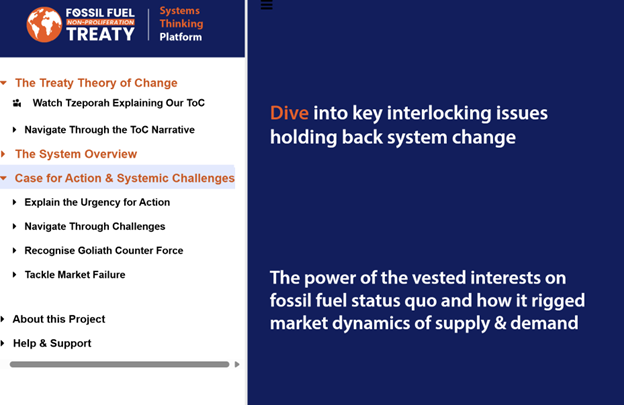
Check out the Treaty’s work on systems thinking – with an interactive deep dive into the Theory of Change of the Fossil Fuel Non-Proliferation Treaty Initiative. Through visuals, diagrams, evidence, and short stories, they dive into systemic challenges and bring everyone on the same page for taking immediate action focused on the fossil fuel supply side and on the risks and opportunities to go for.

Manifesto for an EcoSocial Energy Transition from the Peoples of the South

February 9, 2023

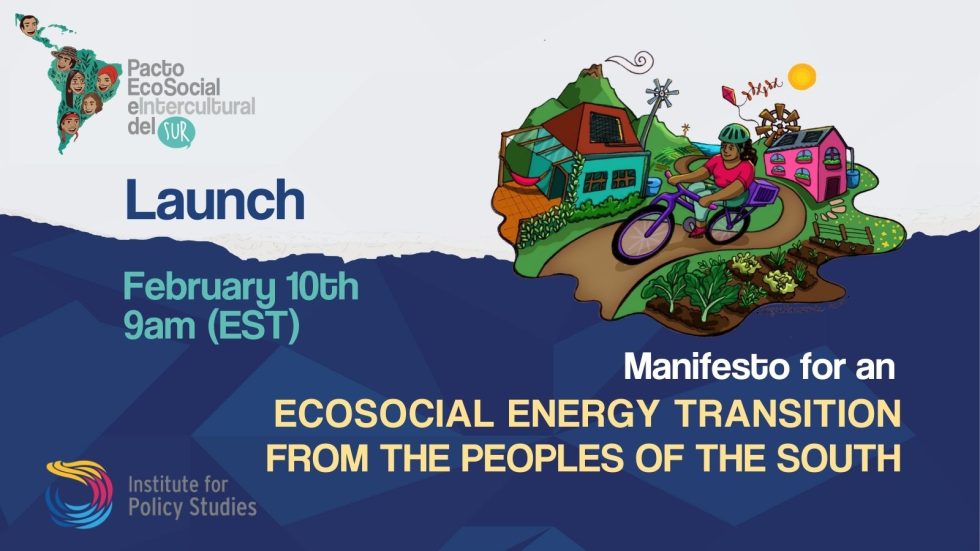
The launch of this Manifesto is an appeal to leaders, institutions, and communities to connect with the lived experience and critical perspectives of Indigenous peoples and local communities, women, and youth throughout the Global South.

We must avoid at all costs a new colonialism during the ‘clean energy transition’, and instead engage in a just and democratic transformation that moves us away from the neoliberal economic system.

‘The engines of this unjust status quo—capitalism, patriarchy, colonialism, and various fundamentalisms—are making a bad situation worse. Therefore, we must urgently debate and implement new visions of ecosocial transition and transformation that are gender-just, regenerative, and popular, that are at once local and international.‘

Allies in the Global North, including ORCIE, now need to promote the manifesto, share in the struggle and support creative collective visions and collective solutions. https://tinyurl.com/ecosocial-manifesto

No Place for Polluters at UN Climate Conferences

January 26, 2023

When a fossil fuel company CEO was named as the President for the next Climate Conference, COP28, ORCIE joined more than 425 groups that called for a halt of the corporate capture of the United Nations and UN Framework Convention on Climate Change. The UN climate body is undermining its credibility and its ability to deliver the real and ambitious actions required to address the climate emergency.

Time for a long overdue conflict-of-interest policy and an accountability framework to stop big polluters from hijacking the climate talks. Learn more: https://tinyurl.com/kickbigpollutersout

  • « Go to Previous Page
  • Go to page 1
  • Go to page 2
  • Go to page 3
  • About Us
  • Our Work
  • Activities & Updates
  • Resources
  • Communications
  • Contact Us
The Office of Religious Congregations for Integral Ecology

© The Office of Religious Congregations for Integral Ecology | Log outBuilt by PeaceWorks

Map

We acknowledge, with respect and humility, that our office is situated on the traditional and unceded territory of the Algonquin Anishinabeg people.