• Skip to primary navigation
  • Skip to main content
The Office of Religious Congregations for Integral Ecology

The Office of Religious Congregations for Integral Ecology

  • About Us
    • Our Story
    • Our Team
    • Members
    • Testimonials
  • Our Work
    • Climate Policy National
    • Climate Policy International
    • Reconciliation
    • Jubilee 2025 Campaign
  • Activities & Updates
  • Resources
  • Communications
    • Media
    • E-Newsletter
  • Contact Us

International

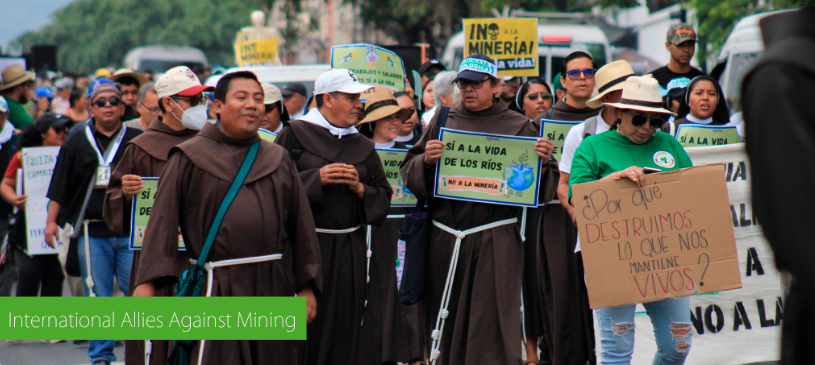
ORCIE Endorses Open Letter by Faith Organizations in Support of Preserving El Salvador’s Historic Ban on Metals Mining

August 18, 2025

The Office of Religious Congregations for Integral Ecology (ORCIE) is pleased to share that we have officially endorsed the Open Letter by Faith Organizations in Support of Preserving El Salvador’s Historic Ban on Metals Mining. This collective statement urges governments to uphold the decision of the people of El Salvador and their church institutions to protect their land, water, and communities from the devastating impacts of metallic mining.

We, the undersigned, from a diversity of church structures(representing local, regional, and national expressions of churches and related agencies),express our steadfast support for the people of El Salvador and their religious institutions and leaders who are struggling to maintain their country’s historic ban on metal mining –in place from 2017 to 2024 — so all Salvadorans can enjoy their God-given right to clean water.  We stand in solidarity with civic and religious leaders who are being persecuted and imprisoned for working against injustices, including the devastation that metals mining would cause their communities…”

We encourage our members to join us in this important initiative by signing on behalf of your congregation. Adding your voice amplifies the call from people of faith who are advocating for ecological justice and the defense of communities most at risk.

📅 Deadline to sign: September 1, 2025

👉 Read and sign the open letter here

Together, our collective witness can amplify the moral voice of the people of El Salvador in their call for justice and the care for creation.
Canada’s Fair Share

August 11, 2025

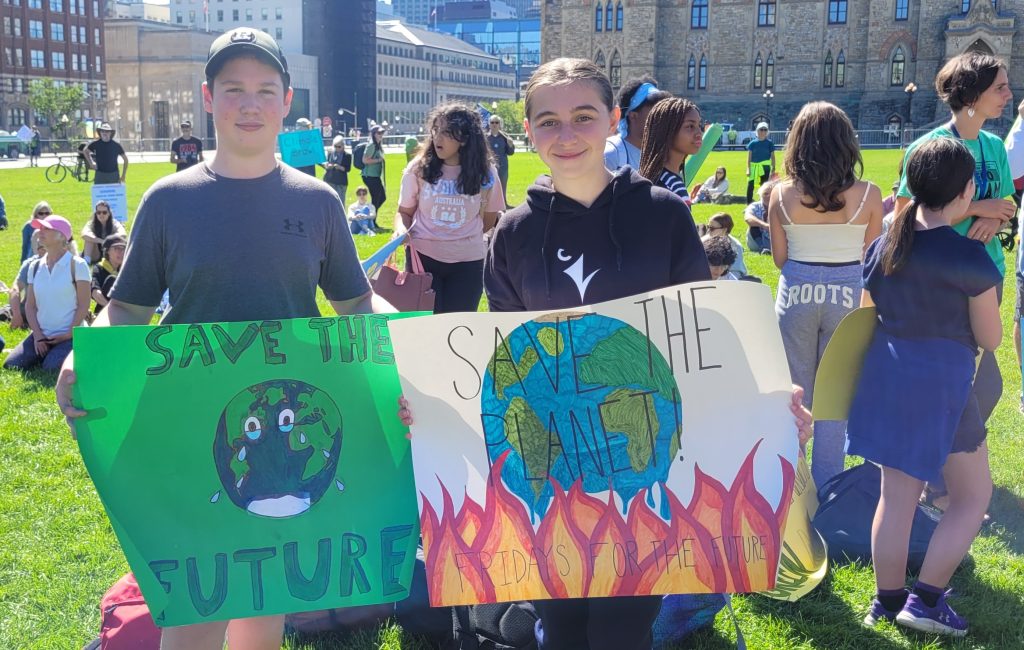
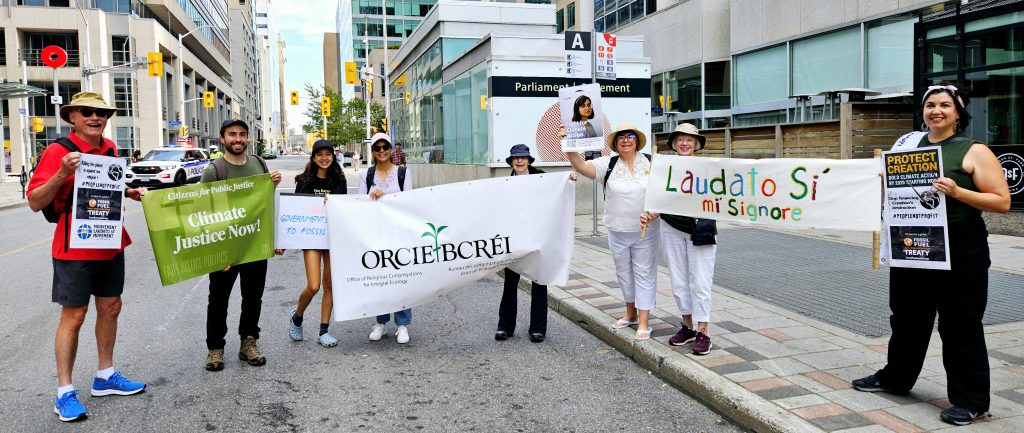
ORCIE is working with organizations from across Canadian civil society to call upon the government of Canada to fulfill our fair share of the global effort to confront the climate crisis. As the 30th annual UN Climate Change Conference (COP30) approaches, Prime Minister Carney has a generational opportunity and responsibility to lead boldly on climate justice, economic transformation, and international solidarity.

The climate emergency was created and is accelerated by a deeply unjust global economic system that is unfairly distorted against Indigenous communities and the Global South.

Countries like Canada – one of the wealthiest in the world, one of the largest historic climate polluters and one of the primary crude oil and gas producers – must contribute its fair share towards global climate action. We must not only make a domestic just
energy transition off fossil fuels but must also use our wealth – generated from resource extraction at home and around the world – to support the Global South to do the same and adapt to the climate crisis.

The Fair Share Platform for Global Climate Equity

This is not charity, but an imperative – recognized under the 2015 Paris Agreement – that countries must fund global climate actions according to their responsibility for the climate crisis and their ability to pay.

Why this matters

We believe that the time has come to reckon with Canada’s role in the international community. Canada can show leadership in supporting energy transitions around the world. We can also help transform unfair systems that have become barriers to climate action.

Doing our fair share means building a new package of support to the international community from the Canadian government – rooted in justice and led by social movements.

  • Triple Canada’s climate finance to support the Global South with grants, not loans.
  • Cancel unjust Global South debt and free billions for climate solutions.
  • Make big polluters and the ultra-rich pay their fair share. 
  • End trade rules that undermine climate action. 

    Read the full platform for a detailed breakdown of how Canada can do its part in the global climate fight.

    Individuals are encouraged to sign the petition to send these demands to the Prime Minister and key cabinet ministers.

    Religious congregations are invited to sign on as an organization and can do so through this form.

    Linking Ecological Debt to Global Financial Exploitation

    February 28, 2025

    For Jubilee 2025 ORCIE explores the concept of ecological debt and its deep connections to global financial exploitation in a special deep-dive position paper, Linking Ecological Debt to Global Financial Exploitation. This paper explores the deep-rooted connections between environmental destruction, colonial legacies, and the ongoing economic disparities between the Global North and South. Inspired by Pope Francis’s urgent appeal for debt forgiveness and systemic reform, the paper advocates for a reform of the current global economic system to advance the Sustainable Development Goals (SDG’s). We invite you to engage with this vital conversation and join us in the pursuit of a just and compassionate future.

    Find the executive summary here: Linking Ecological Debt to Global Financial Exploitation Summary

    Find the Spanish version of the Executive Summary Here: Vinculando la deuda ecológica a la explotación financiera mundial

    Ecological_Debt_ Position_Paper_FINALDownload

    We need a ‘multilateralism from below’

    December 28, 2024

    … the current system is inadequate to address the multiple crises we are facing.


    This fall, ORCIE followed with attention the meetings and negotiations for a Global Plastics Treaty, the Global Biodiversity Framework and the COP29 Climate Change Convention. Despite positive outcomes, what did not happen at these international meetings put the implementation of these important accords at risk. When meetings end without an agreement, future negotiations are put to question. It is the same with the global financial system, the business as usual approaches are not working.


    Parties to the United Nations Framework Convention of Climate Change (UNFCC) met in Baku, Azerbaijan for their 29th Conference, this time to focus on climate finance and to determine the New Collective Quantified Goal (NCQG) to meet the needs of developing countries, and set the foundations for climate justice and action for the next decade. When we talk about ‘climate finance’ we mean local, national or transnational financing —drawn from public, private and alternative sources of financing—that seeks to support mitigation and adaptation actions that will address climate change. Frustratingly, the climate needs of the Global South are in the trillions and the COP29 decision on NCQG only set a goal of $300 billion USD per year, by 2035.


    Disappointed with quantity ($) in commitments we expected to see improvements in quality, but this modest increase also missed the target of redirecting public finance into grants and non-debt creating instruments, and makes no distinction between mitigation, adaptation and the third pillar to climate finance – loss and damage. The scaling up of climate finance is about the Global North contributing its fair share and to have this shameful result after three years of COP negotiations shows how clearly the needs and priorities of developing countries are being dismissed. The finance conversations cannot end in Baku but must be moved forward with action on multiple levels and include reforming international finance architecture and addressing the debt crisis.


    Meanwhile, how do we articulate the growing need for these multilateral processes? We must get back to the focus on a just transition for workers, and skip the UN conference tourism, the fossil fuel lobbyists and the elected leaders flying in for a day instead of truly participating in a process. We must commit to a successful process because, while flawed, civil society and countries of the Global South are able to participate in the UNFCCC, compared to other international institutions or spaces (like the World Bank) that are playing a reinforcing role for the Global North.


    It is clear the current international financial system is inadequate to address the multiple crises we are facing: climate and ecological justice with growing poverty and inequalities worldwide. Yet, finance is central to development and climate action. COP29 should have been about new and additional public grants-based climate finance that is adequate, predictable, needs-based, rights-responsive and most of all provided by developed countries to fulfill their obligations under the Paris Agreement. Building political will and public pressure will be crucial to ensure the next negotiations don’t fall apart and multilateral spaces are strengthened so we can get back to work.

    Pope Francis challenges us to see climate action as a means to strengthen democracy and to renew, recreate and reconfigure multilateral processes. Let’s pray and work for an increase in a ‘multilateralism from below’ in 2025. It may be the only thing we have to save the UN conferences.

    “The demands that rise up from below throughout the world, where activists from very different countries help and support one another, can end up pressuring the sources of power. It is to be hoped that this will happen with respect to the climate crisis. For this reason, I reiterate that “unless citizens control political power – national, regional and municipal – it will not be possible to control damage to the environment.”

    Pope Francis, Laudate Deum, 38

    Report on COP28

    December 20, 2024

    Genevieve Gallant was a virtual delegate to COP28, the 28th Conference of the Parties to the United Nations Framework Convention on Climate Change, from Nov 30-Dec 12, 2023.

    In political speak – COP28 was a complex event that showcased both the progress and the challenges inherent in global climate negotiations. The summit also underscored the need for greater ambition and a more robust response to the influence of big polluters.

    What COP28 delivered:

    • A political signal that the fossil fuel era needs to end and that the world will have to transition away from fossil energies.
    • A clear indication of the time-frames: this needs to happen in this critical decade and must achieve net zero emissions globally by 2050.

    A few highlights:

    • It was a very big deal to have the decision text include specific wording about the transition away from fossil fuels. Fossil fuels – coal, oil and gas – are by far the largest contributor to global climate change.
    • Explicitly naming the need for the phaseout of fossil fuels forces the world to recognize we are at the end of an era. COP28 gave us a clear indication of the timeframes: this needs to happen in this critical decade and must achieve net zero emissions globally by 2050. Is it enough? Let’s work on limiting the qualifiers and loopholes that allow for ongoing expansion of coal, oil and gas projects.  
    • Globally and in Canada fossil fuel production is up. Fossil fuel extraction and burning are also associated with many converging and localized social, economic, and environmental harms that are rarely accounted for in climate mitigation scenarios. This is what we mean when we need to focus on an integral ecology approach, where we consider the full range of consequences and address them in our response. 
    • Courage is contagious. During the summit 4 countries joined the Fossil Fuel Non-Proliferation Treaty, including Colombia!  Globally and in Canada, between the provinces like Alberta and B.C., an equitable transition away from fossil fuel production must recognize differentiated responsibilities and capabilities.  
    • Up next is the hot button issue of finance, postponed to COP29 for the adoption of a new climate finance goal (NCQC). This new goal will replace developed countries’ current commitment of providing $100 billion annually in climate finance to developing nations, first agreed to in 2009. The new goal will need to take into account developing countries’ needs and priorities, estimated at $5.8 trillion – $5.9 trillion up until 2030.

    THE DISCONNECT

    No fossil fuel company or country has a real plan for phasing out fossil fuels. Almost all expect to continue extracting coal, oil and gas far into the future — far beyond what is needed to cut emissions in line with climate goals of keeping global warming to 1.5 or 2 degrees Celsius. Almost every country and company sees itself in a unique position, as the future last producer of fossil fuels, with unique reasons – ex: ‘we are the cleanest’, ‘we have the best carbon offset’, ‘we are not ‘them”. As a result, countries, including Canada, are rushing to gain the upper hand and share of the profits before the world turns toward renewables.

    THERE IS ANOTHER WAY

    Oil and gas is being extracted thanks to the social license, the informal contract between the public, private organizations, and the government that starts with public acceptance and is based on our trust in the legitimacy, credibility, effectiveness, and fairness of the project.

    There’s a rush to produce oil and gas while we will still allow it. Will we allow it? As we move towards eliminating fossil fuels, faith-based organizations who can speak to these moral questions become central.

    MULTILATERALISM FROM BELOW

    Pope Francis calls us to reconfigure and recreate the old multilateralism, and to recognize that it is the civil society groups, like ORCIE, that help to compensate for the shortcomings of the international community and its lack of attention to fundamental human rights. 

    The demands that rise up from below throughout the world, where activists from very different countries help and support one another, can end up pressuring the sources of power. For this reason, I reiterate that “unless citizens control political power – national, regional and municipal – it will not be possible to control damage to the environment. Pope Francis in Laudate Deum

    • « Go to Previous Page
    • Go to page 1
    • Go to page 2
    • Go to page 3
    • Go to Next Page »
    • About Us
    • Our Work
    • Activities & Updates
    • Resources
    • Communications
    • Contact Us
    The Office of Religious Congregations for Integral Ecology

    © The Office of Religious Congregations for Integral Ecology | Log outBuilt by PeaceWorks

    Map

    We acknowledge, with respect and humility, that our office is situated on the traditional and unceded territory of the Algonquin Anishinabeg people.