• Skip to primary navigation
  • Skip to main content
The Office of Religious Congregations for Integral Ecology

The Office of Religious Congregations for Integral Ecology

  • About Us
    • Our Story
    • Our Team
    • Members
    • Testimonials
  • Our Work
    • Climate Policy National
    • Climate Policy International
    • Reconciliation
    • Jubilee 2025 Campaign
  • Activities & Updates
  • Resources
  • Communications
    • Media
    • E-Newsletter
  • Contact Us

Activities

Protecting Our Common Home: ORCIE’s Reflections on Earth for Sale

June 4, 2026 Filed Under: Activities, Communications

For many, Maude Barlow, as well as her incredible body of work, are well-known and deeply appreciated. Maude co-founded the Council of Canadians, served as senior water advisor to the UN, and in 2005, along with the late Tony Clarke (former co-Director of Social Affairs for the Canadian Conference of Catholic Bishops) was awarded the prestigious Right Livelihood Award.

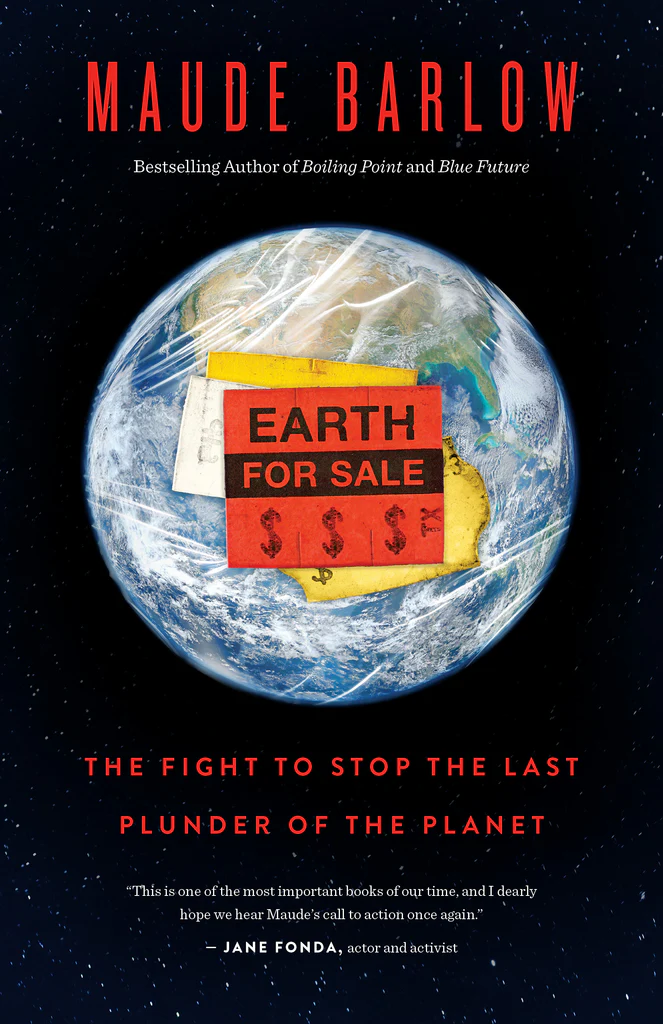
Author of over 20 books—several of which focus on protecting people, the planet, and especially water—her latest publication, Earth for Sale: The Fight to Stop the Last Plunder of the Planet, is of direct interest to ORCIE and can provide guidance for our organization’s on‑going work. Released in early May 2026, Earth for Sale issues a clarion call to avoid “the financialization of nature.”

To prepare for ORCIE’s June 25, 2026, online discussion with Maude, we encourage everyone to read Earth for Sale – but if that is not possible by then, participants may appreciate this quick review of the issues that Maude is encouraging us to understand and mobilize around.

Earth for Sale begins with a stark quotation from British environmental writer, George Monbiot: “Climate breakdown is the result of a global failure to address the power of private capital.” This theme guides the entire book.

The “financialization of nature” is nothing less than “a threat to the planet and human survival” (pg.2) encompassing measures variously described as carbon trading, water pollution trading, biodiversity credits, wildlife conservation bonds, nature bonds, plastics offsets, nature-based solutions, green growth, natural capital, water futures and ecosystem services. All are advanced – usually at least initially in good faith – to address the environmental crisis. But they threaten to be “just as dangerous to the planet as the plunderers of old” (pg. 8).

These processes of financialization replace government responsibility and regulation with the transfer of authority over natural resources to the private sector. This is most often accomplished by government deregulation or privatization. But large international institutions have been more than willing to turn nature into “an asset class,” in effect bringing nature into the market—where, of course, market experts take control.

Private money streaming into the green economy has “exploded” (pg. 39). According to the UN Environment Programme, private finance for nature surged elevenfold in four years, from US$9.4 billion in 2020 to US$102 billion in 2024 (pg. 40).

How this is done is described in Chapter 2. We know that 69 of the top 100 economies of the world by revenue are not countries but transnational corporations. As they search for “carbon neutrality” or “net‑zero” emissions claims to protect their brand while nevertheless maintaining current operations, several strategies exist for them to invest in “green bonds,” “carbon offsets,” or “ecosystem services” that often result in greenwashing or even “carbon neocolonialism” (pg. 63).

What could possibly go wrong?

In the name of protecting the environment, in many instances, community control is redirected, or lost entirely. Indigenous communities are particularly affected when states turn over ancestral territories to asset managers or sovereign wealth funds (to promote, as the Carney federal government like to say, “Projects of National Interest”). There are many examples of these schemes providing little to no results – especially not to protection of the 1 million species that now face extinction in our world (pg. 140).

Earth for Sale provides several examples of “false carbon solutions”—the same warning raised by the Catholic Churches of the Global South in their recent manifestos (see A Just Transition: The Global South Churches’ Call for Climate Justice and Participation – The Office of Religious Congregations for Integral Ecology). Our recent advocacy efforts reveal how these same “false solutions” approach take shape on the ground. Several ORCIE members participated in the UN’s Biodiversity COP15 in Montreal in December 2022, where we—alongside many other organizations—advocated for a cap on plastic production. Yet no global plastics treaty has been achieved, even as companies have turned to the use of “plastic offsets.” Likewise, ORCIE worked in coalition with half-dozen faith-based organizations during the 2025 Turn Debt into Hope campaign. While this effort did not result in debt cancellation for countries of the Global South, “debt‑for‑nature swaps” (pg. 133; 149) have become increasingly prevalent.

As Barlow notes, several major conservation organizations—including The Nature Conservancy, World Wildlife Fund, and the World Resources Institute—have partnered with the same financial actors advancing these market‑based environmental “solutions”.

Conclusion

In the afterword of Earth for Sale, we read: “You put your hand out to touch the universe in a way that you can affect it, however small that may feel to you. But – and this is important – you must have faith that many others around the world are doing the same, even though you cannot know who they all are or what they are contributing. Hope requires action; action requires hope. Both require faith in a larger good.”

Maude Barlow, and her writings, provide hope, faith and compel us to action.

Questions to Deepen Our Collective Reflection

To help guide your preparation for the June 25 online book launch and discussion, here are some questions you may find helpful to consider asking the author.

  • Is there a place for the private sector to play positive roles in the search for shared solutions to the environmental crisis? If so, what might good practices look like?
  • What are the best practices that prevent congregational investments from being unwittingly used by asset managers in the financialization of nature?
  • At the UN’s Climate COP26 in 2021, 40 countries agreed to phase out coal‑fired power. By COP28 in 2024, nearly 200 countries committed to transitioning away from fossil fuels. Building on this momentum, COP30 helped catalyze the first Conference on Transitioning Away from Fossil Fuels, held in Santa Marta, Colombia, where 57 countries named the root causes of the climate crisis and the political and economic systems—including trade and investment treaties—that perpetuate it. In light of these developments, where can meaningful progress still be made in international forums for change?
  • If (as reported on page 186) two‑thirds of climate damage is created by just 10% of the population, what steps must be taken to “decarbonize the rich”?
  • One of your favourite quotes seems to be Martin Luther King Jr.’s: “It may be true that the law cannot change the heart, but it can restrain the heartless.” What laws do we need to see passed in Canada to restrain the financialization of nature?
  • In your 2022 book Still Hopeful: Lessons From a Life of Activism, you wrote that one of the lessons learned was to “go to the heart of the human story to touch hearts as well as minds if you want to get people out of their silos” (pg. 59). With that in mind, can you share some of the stories that moved you so deeply that they led you to write Earth for Sale?

Earth for Sale — Book Launch and Discussion on the Governance of Our Natural Resources with Maude Barlow

June 2, 2026 Filed Under: Activities, Communications

The Office of Religious Congregations for Integral Ecology (ORCIE) warmly invites you to a special book‑launch and discussion with renowned author and activist Maude Barlow on Thursday, June 25 at 2:00 p.m. (EDT).

Together, we will learn from her newest publication, Earth for Sale: The Fight to Stop the Last Plunder of the Planet—a compelling and timely call to protect the global commons and safeguard our shared future.

About the Book

In Earth for Sale, Maude Barlow introduces us to the growing trend of “financializing nature”—the new commercialization of the commons. She documents how corporate interests are increasingly shaping the governance of land, water, forests, and biodiversity, and why efforts to protect nature must not be handed over to private actors driven by profit. Her analysis invites us to reflect deeply on what it means to defend the integrity of Earth’s systems in an era of accelerating ecological and economic pressures.

What to Expect

The program will offer a thoughtful blend of reflection, Maude Barlow’s lecture, and an engaging conversation with participants, inviting us to consider the urgent questions raised in the book. Please note that the event will be in English only.

Prepare for the Conversation

To prepare for ORCIE’s June 25, 2026, online discussion with Maude, we encourage everyone to read Earth for Sale – but if that is not possible by then, participants may appreciate this quick review of the issues that Maude is encouraging us to understand and mobilize around: Protecting Our Common Home: ORCIE’s Reflections on Earth for Sale

You can order Earth for Sale here:
https://ecwpress.com/products/earth-for-sale

Join Us

We hope you will join us for this vital conversation as we reflect on how best to protect our common home and ensure that decisions about nature serve people and planet alike. All are welcome!

REGISTER HERE: Meeting Registration – Zoom


Turning Debt Into Hope: ORCIE’s Role in a Collective Call for Justice

May 22, 2026 Filed Under: Activities, Advocacy, Take Action

After fifteen months of steady advocacy and education, the Turn Debt Into Hope campaign reached a powerful culmination on April 28 with a Parliamentary breakfast and a rally on Parliament Hill.

The global campaign was led by Caritas Internationalis in 2025 to mark the Jubilee Year around the world. In Canada, it was carried out by an ecumenical coalition of organizations, including Development and Peace – Caritas Canada (DPCC), KAIROS Canada, Citizens for Public Justice, the Canadian Council of Churches, and ORCIE.

For ORCIE, this moment marked not only the close of a national campaign and a recognition of the strength of coalition work, but also a clear demonstration of what becomes possible when Religious Congregations engage their elected leaders with courage and hope.

ORCIE in the Shared Effort

Through the Turn Debt into Hope campaign, ORCIE shifted its advocacy to a Canadian focus—calling for grants instead of loans for climate finance and the cancellation of unsustainable debts for developing countries.

How we took part

  • ORCIE’s ecological debt position paper
  • The Global South Voices project, which gathered impact statements from Sisters in the Global South on ecological debt and its links to financial debt.
  • Participation in the COP30 side event “Responding to the Global South Catholic Bishops Conferences’ Call for Climate Justice,” where ORCIE staff served as one of the panelists, linking ecological and financial debt crises.
  • Impact statements and quotes for the rally event and press release, including Sister Ligia Molina’s (Congregation of Notre Dame, Honduras) testimony.
  • Eight ORCIE congregations took part in the Parliamentary Paper Petition—gathering signatures, meeting MPs, and ensuring that the voices of Religious Congregations were present in MP offices. This local engagement proved essential.

A Crucial Meeting: Sisters of St. Joseph and MP Rob Oliphant

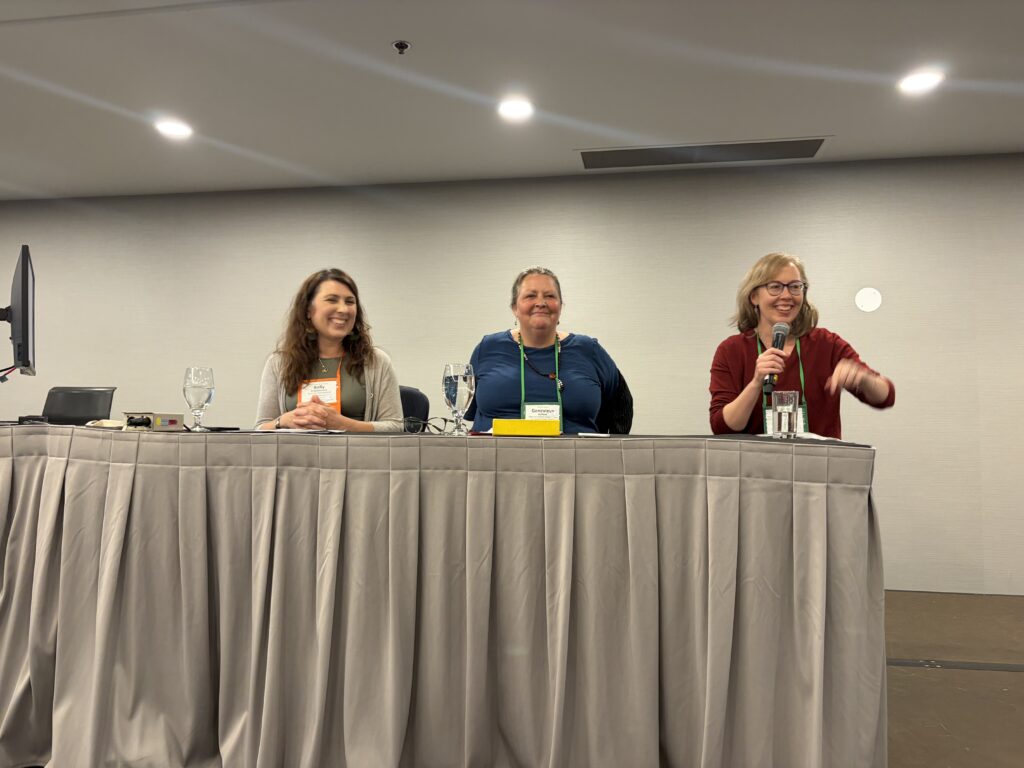
Sasquia Antúnez Pineda, Vickie McNally, Sister Pat Boucher, MP Rob Oliphant, and Sister Janet Speth

A turning point came on March 30, when the Sisters of St. Joseph of Toronto, accompanied by ORCIE staff Sasquia Antúnez Pineda, met with MP Rob Oliphant, Parliamentary Secretary to the Minister of Foreign Affairs.

This meeting—rooted in the Sisters’ ongoing presence and ministry in his riding—opened the door to everything that followed. MP Oliphant agreed to:

  • Sponsor the Parliamentary Panel
  • Present the Parliamentary Paper Petition in the House of Commons
  • Receive all 75,500+ petition signatures at the rally

April 28: A Day of Witness and Hope

The day began with a Parliamentary breakfast, sponsored by MP Oliphant and the Sisters of St. Joseph, titled “Turn Debt Into Hope: Why tackling sovereign debt matters for global stability and sustainable development.”

MPs from multiple parties attended, including Elizabeth May, Brendan Hanley, and Greg Fergus, along with Parliamentary staffers, representatives from civil society organizations including ONE Campaign, Results Canada, the Canadian Network on Corporate Accountability, Climate Action Network Canada, Citizens’ Climate Lobby and KAIROS members. Their presence reflected the broad, cross‑party concern for debt justice.

Speakers

Wesley Chibamba (Caritas Africa); Dean Detloff and Kiegan Irish (Development and Peace–Caritas Canada); Caroline Brouillette (Climate Action Network Canada)
Moderators: Beth Lorimer (KAIROS) and Geneviève Gallant (ORCIE)

At noon, more than 100 people gathered for the rally on Parliament Hill. MP Oliphant accepted 75,500+ Canadian signatures, joined by MP Judy Sgro. Students, sisters, professors, and coalition partners brought energy and justice calls to the moment.

MP Oliphant spoke about Jubilee’s biblical foundations and Canada’s past involvement in sovereign debt cancellation, while also underscoring the urgent need to confront today’s unsustainable and unfair debt burdens crippling developing countries: “Canada has led the way for almost seventy years in debt forgiveness. We don’t forgive all debt, because the reality is that we want a combination of grants and loans—this helps countries establish sustainability, credit ratings, it establishes them as full partners in our global world. But debt can be crippling, can be unsustainable and can drop down the level and standard of living that all of us can benefit from. So, I am pleased to receive these petitions.”

MP Judy Sgro: “We are waiting for you to work with us to ensure that we have a better world”

A Visible Impact — Thanks to Your Engagement

This campaign showed something important: MPs respond to their local communities. The engagement of ORCIE congregations—your signatures, your meetings with your MPs, your faithful presence—wove an important thread into the wider coalition effort.

Together, this helped nurture:

• The Parliamentary breakfast

 • The public petition handover on Parliament Hill

• Cross‑party MP engagement

• A united coalition voice for debt and climate justice

We are deeply grateful to every congregation that participated, and especially to the Sisters of St. Joseph of Toronto for their decisive role in meeting MP Oliphant. Your witness made these moments possible.

What’s Next

The coalition has already held more than 20 meetings with MPs, with a few additional conversations still anticipated. On April 21, MP Brendan Hanley presented the Parliamentary Paper Petition in the House of Commons, and several other MPs are expected to table petitions in the coming weeks.

The coalition has also submitted a request to appear before the Parliamentary Standing Committee on Foreign Affairs and International Development as part of its study on the sovereign debt crisis. If invited, ORCIE would participate as a supporting witness on ecological debt.

As these final petition readings unfold, ORCIE will continue offering accompaniment to congregations engaging their local MPs, recognizing that advocacy grounded in community relationships has the greatest impact.

Watch MP Brendan Hanley read the Parliamentary Paper Petition in the House of Commons: ParlVu

Bulletin BCRÉI | Printemps 2026 

March 30, 2026 Filed Under: Activities, Communications

Bulletin BCRÉI Édition du printemps 2026_EdDownload

ORCIE Offerings | Spring 2026

March 30, 2026 Filed Under: Activities, Communications

ORCIE Offerings Spring 2026Download
  • Page 1
  • Page 2
  • Page 3
  • Interim pages omitted …
  • Page 6
  • Go to Next Page »
  • About Us
  • Our Work
  • Activities & Updates
  • Resources
  • Communications
  • Contact Us
The Office of Religious Congregations for Integral Ecology

© The Office of Religious Congregations for Integral Ecology | Log outBuilt by PeaceWorks

Map

We acknowledge, with respect and humility, that our office is situated on the traditional and unceded territory of the Algonquin Anishinabeg people.